Non-Owner SR-22 in New York: FR-19 and High-Risk Options
Free to compare
Why New York Uses FR-19 Instead of SR-22
New York is one of four states that does not recognize SR-22 certificates. Instead, the New York DMV requires an FR-19 Financial Security Certificate to prove you carry continuous liability coverage after certain violations, suspensions, or lapses. The FR-19 serves the same function — it's filed by your insurer directly with the DMV and remains active as long as your policy stays in force.
If your license was suspended for driving uninsured, a DUI (DWI in New York), refusal to take a chemical test, or accumulating 11+ points in 18 months, you'll likely need an FR-19 to reinstate. The DMV will specify the FR-19 requirement in your suspension notice. Filing periods typically run 3 years for DWI and uninsured operation, though the DMV determines the exact duration based on your violation.
Not every insurer files FR-19 certificates. Many standard carriers either decline high-risk drivers outright or refuse to file the FR-19 even if they'll write the policy. You need a carrier licensed in New York that both accepts your violation profile and submits electronic FR-19 filings to the DMV.
The FR-19 itself costs nothing to file — it's a certificate your insurer submits at no additional charge. The rate increase comes from your underlying violation and high-risk classification, not from the filing requirement. New York SR-22 requirements
What Non-Owner Coverage Means in New York
Non-owner auto insurance provides liability coverage when you drive a vehicle you don't own — a rental, a borrowed car, or a vehicle provided by an employer. It does not cover a car registered in your name or one you regularly use. In New York, the minimum liability limits are $25,000 per person / $50,000 per accident for bodily injury and $10,000 for property damage (25/50/10). Your non-owner policy must meet or exceed these limits to satisfy FR-19 requirements.
Non-owner policies are common for drivers who lost their license, sold their car after a DUI, or need to maintain continuous coverage while suspended. If you're required to file an FR-19 and you don't own a vehicle, a non-owner policy is usually the most affordable way to meet the DMV's proof-of-insurance mandate.
Non-owner coverage does not include comprehensive, collision, or uninsured motorist property damage. It's liability-only. You're covered if you cause an accident while driving someone else's car, but the policy won't pay for damage to the vehicle you're driving or your own injuries. Most high-risk drivers on a tight budget use non-owner policies solely to satisfy the FR-19 filing, not as primary coverage.
If you later buy a vehicle, you'll need to convert to a standard or high-risk owner policy and transfer the FR-19 filing. The non-owner policy cannot cover a car titled or registered to you. non-owner SR-22 coverage
Which Carriers Write Non-Owner FR-19 Policies
Carrier availability for non-owner FR-19 policies in New York is limited. Most standard insurers — GEICO, State Farm, Progressive's standard tier — either decline non-owner applications from drivers with DUIs or suspensions, or they write the policy but refuse to file the FR-19. You need a carrier that does both: accepts high-risk non-owner applicants and submits electronic FR-19 certificates to the New York DMV.
Non-standard carriers that frequently write FR-19 non-owner policies in New York include Dairyland, The General, Bristol West, and National General. These insurers specialize in high-risk profiles and maintain direct filing relationships with the DMV. Regional carriers and Managing General Agents (MGAs) also write FR-19 policies, though their appetite varies by violation type and how recently the incident occurred.
Rates vary widely. A non-owner FR-19 policy after a DWI conviction typically costs between $50 and $150 per month, depending on your age, county, the number of violations on your record, and how long ago the conviction occurred. Drivers under 25 or those with multiple DUIs often see quotes at the higher end of that range or above it.
Some carriers require a down payment of 20–30% of the annual premium. Others offer monthly payment plans with installment fees. If you've been declined by two or more carriers, working with an independent agent who specializes in non-standard insurance or using a high-risk comparison tool can surface carriers you won't find through direct-to-consumer channels.
How Long You'll Carry the FR-19 Filing
The New York DMV sets the FR-19 filing period based on your specific violation. For DWI convictions, the filing period is typically 3 years from the date your license is reinstated, not from the date of conviction. If your license was suspended for uninsured operation, the DMV usually requires a 3-year filing as well. For chemical test refusals, the period may extend longer depending on whether it's a first or subsequent offense.
The filing period doesn't start until your license is valid again. If your suspension lasts 6 months and you then reinstate with an FR-19, the 3-year clock begins on your reinstatement date. Any lapse in coverage during that period resets the requirement — your insurer notifies the DMV immediately if your policy cancels, and the DMV can re-suspend your license within 24 hours.
If you move out of New York during the filing period, the FR-19 requirement does not automatically transfer. You'll need to check whether your new state requires an SR-22 or equivalent filing. Many states recognize out-of-state filings, but not all. Letting your New York FR-19 lapse while the DMV still has an active filing requirement on your record can trigger an indefinite suspension, even if you no longer live in the state.
Once the filing period ends and you've maintained continuous coverage, your insurer will notify the DMV that the FR-19 is no longer required. Your rates won't drop immediately — the underlying violation still affects your record for years — but you'll have more carrier options and can shop outside the non-standard market.

Stay Covered While You Drive Borrowed Cars
Find Coverage After Violations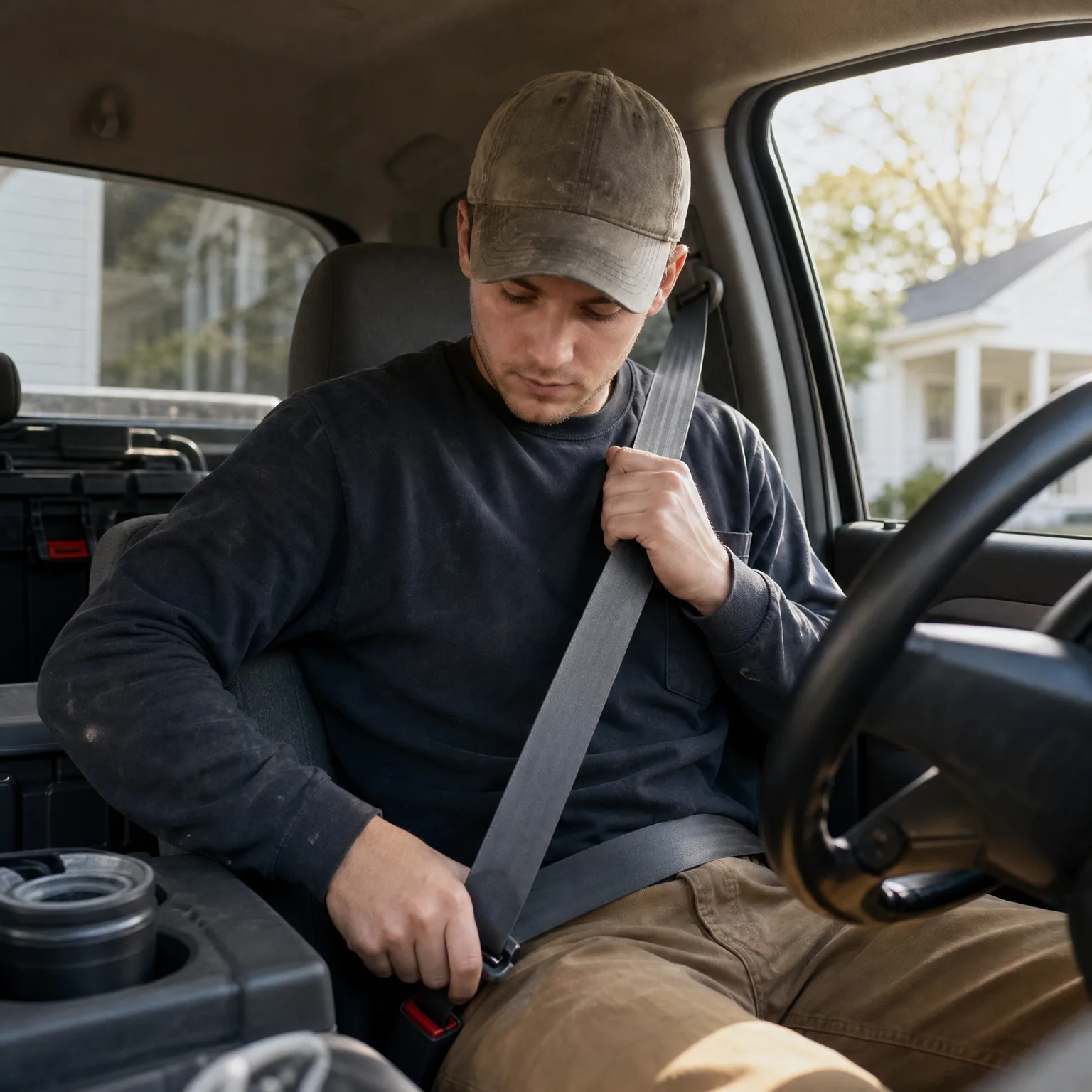
What Happens If Your FR-19 Policy Lapses
If your non-owner FR-19 policy cancels for any reason — nonpayment, fraud, or voluntary cancellation — your insurer is required to notify the New York DMV electronically within 24 hours. The DMV will suspend your license immediately, often before you receive written notice. There is no grace period. You cannot drive legally, even if you reinstate coverage the next day, until the DMV processes a new FR-19 filing and lifts the suspension.
Reinstating your license after an FR-19 lapse typically requires paying a suspension termination fee of $50, submitting a new FR-19 filing from an active policy, and in some cases appearing at a DMV office in person. The lapse itself may extend your total filing period — some DMV offices restart the 3-year clock from the date of reinstatement after a lapse.
Many non-standard insurers will decline to write a new policy if you've lapsed previously. Drivers who let FR-19 policies cancel often face higher premiums on subsequent policies, smaller carrier pools, and stricter underwriting. If you're struggling to pay your premium, contact your insurer before the policy cancels. Some carriers offer payment extensions or reduced coverage limits to keep the policy active.
Switching carriers mid-filing period is allowed, but timing is critical. Your new policy must be in force and the FR-19 filed with the DMV before you cancel the old policy. Most high-risk drivers overlap coverage by at least a few days to avoid any gap that could trigger a suspension.
How to Lower Your FR-19 Non-Owner Rates Over Time
FR-19 non-owner rates are highest in the first 12–24 months after your conviction or suspension. As time passes and you maintain continuous coverage without new violations, your rates typically decrease. A DWI that's 2 years old costs significantly less to insure than one that's 6 months old — expect a 15–30% rate reduction at each annual renewal if your record stays clean.
Raising your liability limits above New York's minimums won't lower your premium, but it can make you eligible for carriers that won't write minimum-limit policies for high-risk drivers. Some non-standard insurers require 50/100/25 or 100/300/50 limits for applicants with DUIs. Higher limits mean higher premiums in the short term, but access to more stable carriers with better claims service.
Completing a New York DMV-approved Drinking Driver Program (DDP) or Defensive Driving Course can reduce points on your license, though it won't erase the underlying conviction. Some insurers offer small discounts — usually 5–10% — for drivers who complete these courses, but availability varies by carrier. The course must be approved by the DMV and completed before you apply for coverage to count.
Shopping your FR-19 non-owner policy every 6–12 months is standard practice in the high-risk market. Rates change frequently, and carriers adjust their appetite for specific violation types without notice. A carrier that declined you 8 months ago may write you today. Drivers who re-shop annually save an average of $300–$600 per year compared to those who stay with their first non-standard carrier long-term.
Where to Compare Non-Owner FR-19 Quotes in New York
Most major insurance comparison sites either don't show non-owner options or exclude high-risk drivers from their quote flow entirely. You need a tool or agent that specializes in non-standard coverage and can access carriers willing to file FR-19 certificates. Independent agents who work with multiple non-standard carriers are often the fastest path to quotes, though not all agents are familiar with FR-19 requirements or non-owner policies.
High-risk comparison tools built for drivers with violations, DUIs, or SR-22 requirements can surface multiple non-owner FR-19 quotes at once. These tools route your application to carriers that actively write your violation profile in New York, reducing the number of declines and wasted applications. Expect to provide details on your conviction date, suspension period, current license status, and any prior lapses.
If you've been declined by three or more direct carriers, working with a Managing General Agent (MGA) or surplus lines broker may be necessary. These brokers place coverage with non-admitted insurers that specialize in the highest-risk profiles — multiple DUIs, revoked licenses, or recent uninsured accidents. Rates are higher, but they're often the only option for drivers standard non-standard carriers won't touch.
Once you have quotes, confirm that the carrier will file the FR-19 electronically with the DMV and ask how long filing typically takes. Most insurers submit the FR-19 within 24–48 hours of policy activation, but some non-standard carriers take longer. You cannot legally drive or complete license reinstatement until the DMV receives and processes the filing. compare high-risk non-owner quotes
Related Articles
Does SR-22 Cover My Teen Driver? What Parents Need to Know
5/18/2026
Switch Non-Owner SR-22 to Regular Policy | Timeline
4/2/2026

File SR-22 the Same Day Your Suspension Starts
5/18/2026

SR-22 and Deferred Prosecution: Filing Requirements
5/18/2026

SR-22 and MADD Victim Impact Panels After a DUI
5/18/2026

SR-22 & Florida JUA: Assigned-Risk Pool Explained
5/18/2026