
When Does Non-Owner SR-22 End — How to Know You're Done
Free to compare
Your SR-22 End Date Was Set When Your Requirement Started
The court order or DMV action that required your SR-22 filing included a specific duration — typically 3 years in most states, but ranging from 1 year in states like Ohio to 5 years for repeat DUI offenders in states like California. That duration started the day your SR-22 was filed with the state, not the day of your conviction or the day your license was suspended. If your DUI conviction was finalized in March but you didn't file SR-22 until May, your 3-year clock started in May.
Your insurance company was not copied on that court order or DMV notice. They know you need continuous SR-22 coverage, but they have no record of when your requirement ends. Most carriers will continue filing — and charging you for — SR-22 indefinitely unless you explicitly request cancellation. This is not malicious; it's simply that your insurer's responsibility is to maintain the filing as long as you hold the policy, not to track your legal compliance timeline.
If you don't have a copy of your original SR-22 order, contact the court that handled your case or the DMV office that issued your suspension. Request a copy of the order or a compliance letter showing your filing start date and required duration. Most state DMVs provide this via online portal, by mail within 7–10 business days, or in person the same day. Without this document, you're guessing at your end date.
How to Confirm Your SR-22 Requirement Has Expired
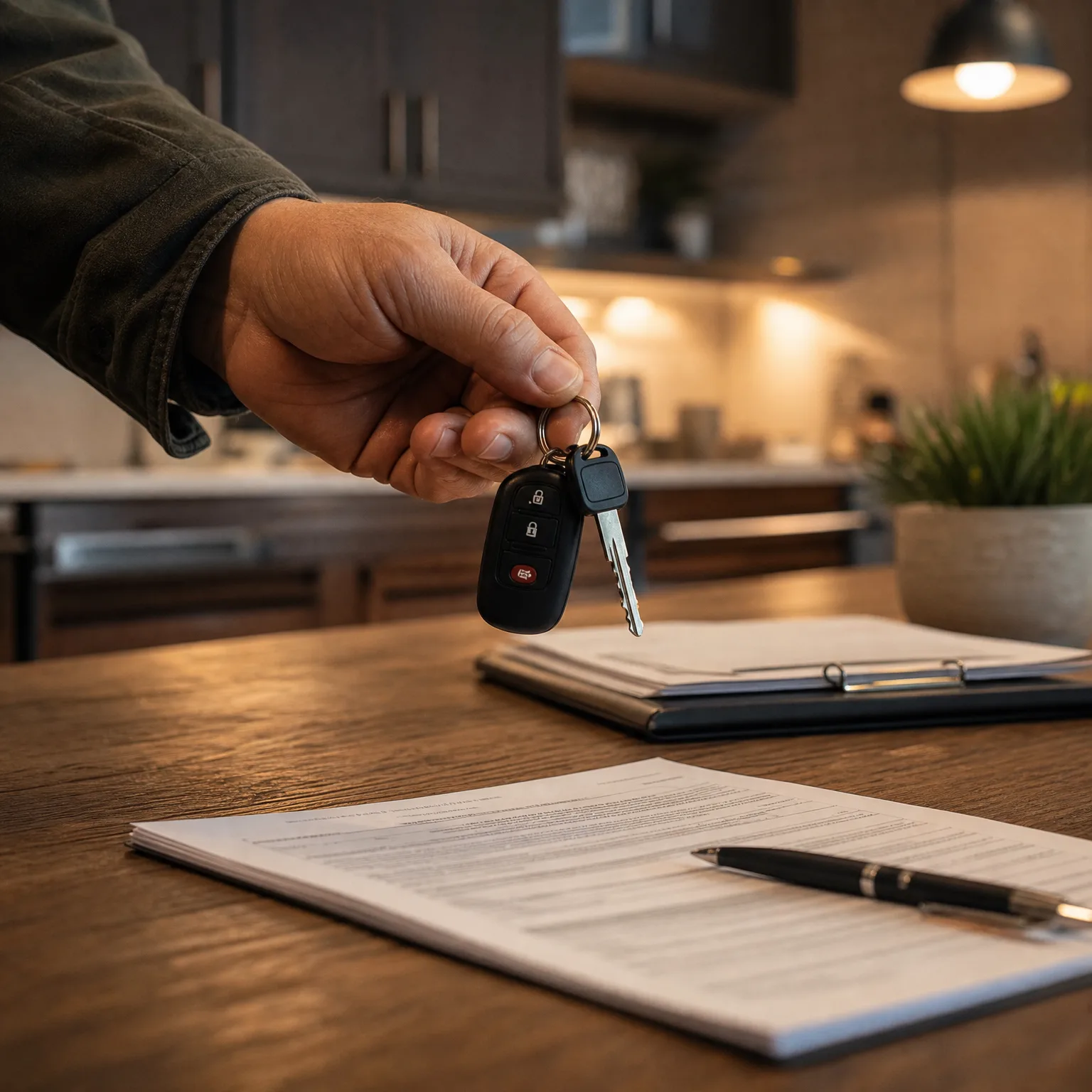
Call or visit your state DMV and request a driver record abstract or compliance status check. In most states, this costs between $5 and $15 and shows whether you currently have an active SR-22 filing requirement. Some states label this clearly as "SR-22 end date" or "financial responsibility filing requirement expires [date]." Others show only "FR filing active: yes/no." If the record shows no active requirement, you're legally clear to cancel.
Do not rely on the date you think your requirement ends. Court-ordered extensions, reinstatement delays, or gaps in your SR-22 coverage can push your end date back. A single lapse in SR-22 coverage — even one day — typically resets the clock in most states, adding another full filing period from the date you refile. If you were required to maintain SR-22 for 3 years starting January 2022 but your policy lapsed for 10 days in March 2023, your new end date is likely March 2026, not January 2025.
Some states send a notice when your SR-22 requirement is about to end, but this is inconsistent. Florida, Texas, and California generally do not send automatic notifications. Virginia and Illinois sometimes do, but delivery is not guaranteed. Treat any notice as a courtesy, not a reliable system. The definitive source is always your current DMV driver record.


How to Cancel Your Non-Owner SR-22 Policy Correctly
Once you've confirmed your SR-22 requirement has ended, contact your insurance company in writing — email is acceptable if you save a copy — and explicitly request SR-22 cancellation and policy termination. Use this language: "I am requesting cancellation of my SR-22 filing and termination of my non-owner policy effective [date]. My SR-22 filing requirement ended on [date] per [state] DMV records." Do not assume a phone call is sufficient. Insurers require written requests to process SR-22 cancellations in most cases.
Your insurer will submit an SR-26 form (or state equivalent) to the DMV, notifying them that your SR-22 filing has been canceled. This typically processes within 3–7 business days, but some states take up to 15 days. If you cancel your SR-22 before your legal requirement ends, the DMV will be notified and may suspend your license again immediately. There is no grace period in most states.
After your insurer processes the cancellation, wait 10–14 days and pull another DMV driver record to confirm the SR-22 filing no longer appears as active. If it still shows active after 14 days, contact both your insurer and the DMV. Occasionally the SR-26 is filed but not processed due to clerical error, and you'll continue accruing what the state considers an active SR-22 filing period even though you've canceled the policy. Verify closure on both sides.

Stay Covered While You Drive Borrowed Cars
Find Coverage After ViolationsWhat Happens If You Cancel SR-22 Too Early
If you cancel your non-owner SR-22 policy before your court or DMV requirement ends, the state receives an SR-26 cancellation notice and typically suspends your license within 10–30 days depending on the state. You will not receive advance warning in most cases. The suspension is automatic and goes into effect even if you weren't driving or don't currently own a vehicle. Reinstatement requires refiling SR-22, paying a reinstatement fee (typically $50–$250), and restarting your full SR-22 filing period from the new filing date.
Some drivers assume that because they have a non-owner policy and don't own a car, the DMV won't enforce the SR-22 requirement. This is incorrect. Non-owner SR-22 is a legal filing requirement tied to your driver's license status, not vehicle ownership. If you're required to maintain SR-22, canceling it without DMV clearance triggers suspension regardless of whether you're actively driving.
If you've already canceled and realize you did so prematurely, refile SR-22 immediately — ideally the same day. Contact the DMV to determine if the cancellation notice has already processed. In some states, if you refile before the DMV processes the SR-26, the gap is not recorded and your end date remains unchanged. In others, any cancellation notice — even if quickly corrected — resets the clock. The outcome depends on your state's processing timeline and whether the suspension has already been issued.

Switching from Non-Owner SR-22 to Standard Insurance
Once your SR-22 requirement officially ends and you've verified clearance with the DMV, you can shop for standard auto insurance if you've purchased or plan to purchase a vehicle. Rates for former SR-22 drivers depend primarily on how much time has passed since the underlying violation. A DUI that occurred 3 years ago — the minimum SR-22 period in most states — still increases premiums by approximately 50–80% compared to a clean record, but that's significantly lower than the 90–140% increase you likely faced immediately after the conviction.
If you don't own a vehicle and don't plan to, you can simply cancel your non-owner policy once SR-22 is no longer required. You are not legally required to carry non-owner insurance unless you have an active SR-22 filing requirement or a court-specific order mandating continuous coverage. Some drivers choose to maintain non-owner liability coverage voluntarily for protection when renting or borrowing vehicles, but this is optional.
Before you cancel your non-owner SR-22 policy, consider how long you'll wait before buying a vehicle and getting standard coverage. If you cancel your non-owner policy and go 30+ days without any auto insurance, you may face a coverage lapse surcharge when you do apply for standard insurance — typically an additional 10–25% rate increase for 6–12 months. If you're planning to buy a car within 60 days of your SR-22 end date, it may be more cost-effective to maintain the non-owner policy until you transition directly to an owner policy with no gap.

Timeline and Cost to Expect After SR-22 Ends
Non-owner SR-22 policies typically cost between $25 and $60 per month depending on your state, violation type, and driving history. Once you cancel, you should receive a prorated refund for any unused portion of your premium if you paid in advance. Most insurers process refunds within 15–30 days via check or direct deposit. If you were paying month-to-month, your final payment covers you through your cancellation date and no refund is due.
Your auto insurance rates will not drop immediately when your SR-22 requirement ends. The underlying violation — DUI, reckless driving, at-fault accident, or suspension — remains on your driving record for 3–10 years depending on your state and the violation type. Insurers continue surcharging for that violation based on their own internal rating periods, which are often longer than the SR-22 filing requirement. A DUI typically affects your rates for 5–10 years in most states, even though your SR-22 requirement may have ended after 3 years.
Rates do decrease incrementally as time passes. Drivers typically see a 10–15% rate reduction at the 3-year mark post-violation, another 10–20% at the 5-year mark, and full clean-record pricing once the violation ages off their record entirely. Shopping multiple carriers when your SR-22 ends is critical — some insurers weight recent violations more heavily than others, and the best rate for an SR-22 driver is rarely the best rate for a post-SR-22 driver.
Frequently Asked Questions
Does my insurance company automatically cancel my SR-22 when the requirement ends?
No. Your insurer does not track your court or DMV end date and will continue filing SR-22 indefinitely unless you request cancellation in writing. You are responsible for confirming your requirement has ended and notifying your carrier to stop the filing.
Will my car insurance rates go down as soon as my SR-22 requirement ends?
Not immediately. The violation that triggered your SR-22 — DUI, suspension, or other incident — remains on your record for 3–10 years and insurers surcharge based on that violation, not the SR-22 filing itself. Rates decrease gradually over time, typically dropping 10–15% at the 3-year mark and more at 5 years.
What happens if I cancel my non-owner SR-22 one month before the requirement ends?
The DMV will receive an SR-26 cancellation notice and suspend your license within 10–30 days in most states. You'll need to refile SR-22, pay a reinstatement fee, and restart your entire filing period from the new date. There is no grace period or partial credit.
How do I prove my SR-22 requirement has ended?
Request a driver record abstract or compliance status report from your state DMV, which costs $5–$15 in most states. This document shows whether you currently have an active SR-22 filing requirement and the end date if applicable. Do not rely on memory or estimates — verify with official DMV records.
Can I switch from non-owner SR-22 to a regular car insurance policy before my SR-22 ends?
Yes, but you must transfer the SR-22 filing to your new owner policy and maintain continuous coverage. If you cancel your non-owner SR-22 and buy a car without immediately adding SR-22 to the new policy, the DMV will receive a cancellation notice and may suspend your license. Coordinate the switch with both insurers to avoid any gap.
Related Articles
Does SR-22 Cover My Teen Driver? What Parents Need to Know
5/18/2026

Switch Non-Owner SR-22 to Regular Policy | Timeline
4/2/2026

File SR-22 the Same Day Your Suspension Starts
5/18/2026

SR-22 and Deferred Prosecution: Filing Requirements
5/18/2026

SR-22 and MADD Victim Impact Panels After a DUI
5/18/2026

SR-22 & Florida JUA: Assigned-Risk Pool Explained
5/18/2026