
Non-Owner SR-22 Insurance — Colorado
Free to compare
When You Need SR-22 Without Owning a Vehicle
You were ordered to file SR-22 in Colorado, but you don't own a car. Maybe you sold it after the suspension, or you've been relying on rideshare and public transit. Now you're stuck: every carrier quote form asks for a vehicle, and when you explain you don't have one, half the agents hang up or route you to a dead-end callback that never comes.
Colorado accepts non-owner SR-22 filings for reinstatement. A non-owner policy provides liability coverage when you drive a vehicle you don't own — a borrowed car, a rental, a friend's vehicle — and the carrier files the SR-22 certificate with the Division of Motor Vehicles on your behalf. The filing satisfies the state's proof-of-insurance requirement even though you hold no vehicle title. Not every carrier writes non-owner policies, and fewer still write them with SR-22 attached, but the ones that do operate in Colorado and will file directly to DMV.
“The 3-year clock starts when DMV receives the certificate, not when you pay for the policy — and a lapse in month 14 resets the entire requirement to zero.”

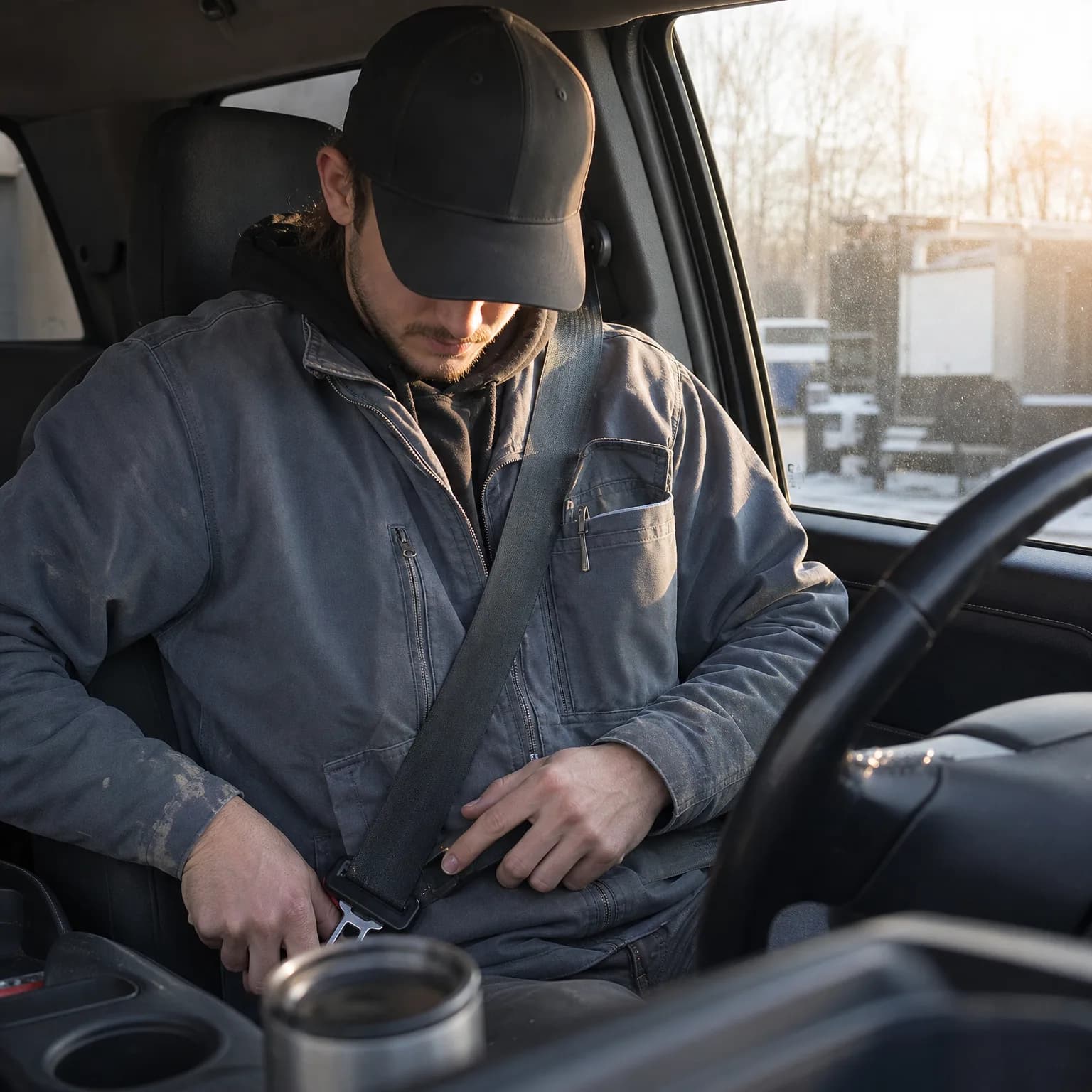
Stay Covered While You Drive Borrowed Cars
Find Coverage After Violations3 years
Colorado SR-22 Filing Period
Colorado requires continuous SR-22 filing for 3 years after a DUI conviction, uninsured driving violation, or alcohol-related revocation, measured from the date DMV receives the certificate — not the date you buy the policy. If the carrier delays filing or DMV processing lags, your clock starts later than you expect.
Colorado Revised Statutes 42-7-301, Financial Responsibility Act
What Non-Owner SR-22 Actually Covers
A non-owner policy provides liability coverage when you drive a vehicle you don't own. Colorado's minimum liability limits are $25,000 per person for bodily injury, $50,000 per accident for bodily injury, and $15,000 for property damage. The non-owner policy covers you at these minimums (or higher if you select them) when you're behind the wheel of a borrowed or rented vehicle. It does not cover damage to the vehicle you're driving — that's the owner's collision coverage or the rental agency's damage waiver.
The SR-22 filing is a certificate the carrier submits to Colorado DMV certifying you hold continuous liability coverage. The filing itself is not insurance; it's proof of insurance. The carrier charges a one-time filing fee (set by the carrier and state) to submit the certificate electronically to DMV. Once filed, the carrier must notify DMV within 15 days if your policy cancels or lapses for any reason. That notification triggers an automatic suspension, and your 3-year filing clock resets to zero when you refile after reinstatement.
The filing clock starts when DMV receives the certificate, not when you pay for the policy. If the carrier delays filing or DMV processing lags, your 3-year requirement extends by that delay — and you won't know until you check your driving record months later.
Related Articles
Non-Owner SR-22: How to File Without Owning a Vehicle
5/18/2026

Do I Need SR-22 Without Owning a Car? Non-Owner Filing
5/18/2026
Non-Owner SR-22 Insurance in Texas
7/13/2026
Non-Owner SR-22: Filing Without a Car | How It Works
5/18/2026
Can I Get SR-22 Without a Driver's License?
5/18/2026

Non-Owner SR-22 Insurance in Florida
7/13/2026

Filing Process and DMV Receipt Timing
Once you buy the non-owner policy, the carrier files the SR-22 certificate electronically to Colorado DMV. Electronic filing is available in Colorado, and most carriers submit within 1-3 business days of policy binding. DMV processes the filing and updates your driving record to show proof of insurance on file. Colorado's reinstatement processing time is typically 20 business days from the date DMV receives all required documents, including the SR-22 certificate, the $95 reinstatement fee, and any other documents the suspension order specified.
The 3-year filing clock starts the day DMV receives the certificate, not the day you pay for the policy. If you buy the policy on Monday and the carrier files on Thursday, your clock starts Thursday. If DMV's system lags and doesn't process the filing until the following week, your clock starts when the system updates. You will not receive a notification from DMV when the filing posts; you must check your driving record online or call Driver Control at 303-205-5606 to confirm receipt.
If you need to reinstate immediately — a court date, a job requirement, a CDL hold — do not assume the filing has posted just because you paid for the policy. Confirm DMV receipt before you take any action that depends on proof of insurance. A lapse between policy purchase and DMV receipt can delay reinstatement by weeks, and if you drive during that window assuming you're covered, you're driving uninsured under state law.
$95
Colorado Reinstatement Fee
Colorado charges a $95 base reinstatement fee to restore a suspended license. This fee is separate from the SR-22 filing fee the carrier charges and must be paid directly to the Division of Motor Vehicles before reinstatement is processed. Multi-tier suspensions (multiple violations or a DUI with other offenses) may carry additional fees.
Colorado Department of Revenue, Division of Motor Vehicles

Lapse Consequences During the Filing Period
Colorado law requires continuous SR-22 filing for the full 3-year period. If your non-owner policy cancels or lapses for any reason — missed payment, non-renewal, voluntary cancellation — the carrier must notify DMV within 15 days. DMV automatically suspends your license the day the lapse notification posts, and the suspension remains in effect until you refile SR-22 and pay another $95 reinstatement fee.
The lapse resets your 3-year clock to zero. If you lapse in month 14 of a 36-month requirement, you do not owe 22 months when you refile — you owe a new 3-year period starting from the date DMV receives the new certificate. This clock-restart rule is the single most expensive failure mode in the SR-22 system, and most carriers will not explain it until after the lapse has already occurred. A single missed payment in year two can extend your total filing requirement to five years or longer, costing thousands of additional premium dollars.
Set up automatic payment from a bank account, not a debit card with an expiration date. If your card expires mid-policy and the payment fails, the carrier cancels the policy and files the lapse notice before you realize the payment bounced. By the time you receive the cancellation letter, DMV has already suspended your license and restarted your clock.
Compare Carriers and Confirm Filing Capability
Request quotes from at least three carriers on the list above. Non-owner SR-22 premiums vary widely by carrier, and the lowest rate for a standard driver profile is rarely the lowest rate for a high-risk profile. Bristol West, Dairyland, Infinity, Kemper, and The General specialize in non-standard underwriting and often quote lower premiums for DUI and suspended-license cases than standard-tier carriers. Progressive and Geico write both standard and non-standard tiers; your quote tier depends on your violation history and how long ago the triggering event occurred.
When you request the quote, confirm three things with the agent or online system: the carrier writes non-owner policies in Colorado, the carrier attaches SR-22 filings to non-owner policies, and the carrier files electronically to Colorado DMV. If any of those three answers is no, the quote is not usable. Do not buy a policy from a carrier that cannot file SR-22 in Colorado; you will pay for coverage that does not satisfy your reinstatement requirement, and you will have to cancel and refile with a different carrier, restarting your clock in the process.
Carriers That Write Non-Owner SR-22 in Colorado
Bristol West, Dairyland, Farmers, Geico, Infinity, Kemper, National General, Progressive, The General, and USAA all write non-owner policies with SR-22 filing in Colorado. Bristol West, Dairyland, Infinity, Kemper, National General, Progressive, and The General operate in the non-standard or standard tier and underwrite high-risk profiles including DUI, multiple violations, and suspended-license reinstatement cases. Geico and Farmers write non-owner SR-22 in their standard tier. USAA writes non-owner SR-22 in the preferred tier but restricts eligibility to military members, veterans, and their families.
Most of these carriers offer online quotes; Bristol West and Kemper also work through brokers. When you request a quote, specify that you need a non-owner policy with SR-22 filing — the system will route you to the correct underwriting path. If the agent or online form does not recognize 'non-owner SR-22' as a product, that carrier does not write it in Colorado, and you should move to the next name on the list. Do not accept a standard auto policy quote if you don't own a vehicle; buying owner coverage when you hold no title wastes premium dollars on collision and comprehensive coverage you cannot use.
Get Your Free Quote
Find Coverage After ViolationsFrequently Asked Questions
Can I get SR-22 in Colorado without owning a car?
Yes. Colorado accepts non-owner SR-22 filings for reinstatement. A non-owner policy provides liability coverage when you drive a vehicle you don't own, and the carrier files the SR-22 certificate to DMV on your behalf. Bristol West, Dairyland, Farmers, Geico, Infinity, Kemper, National General, Progressive, The General, and USAA all write non-owner SR-22 in Colorado.
How long does Colorado require SR-22 filing after a DUI?
Colorado requires SR-22 filing for 3 years after a DUI conviction, measured from the date DMV receives the certificate. The clock does not start when you buy the policy; it starts when the carrier's filing posts to your DMV record. If your policy lapses during the 3-year period, the clock resets to zero when you refile.
What happens if my non-owner SR-22 policy lapses in Colorado?
Colorado DMV automatically suspends your license the day the lapse notification posts. The carrier must notify DMV within 15 days of any cancellation or lapse. Your 3-year filing requirement resets to zero when you refile, and you must pay another $95 reinstatement fee. A lapse in month 14 restarts the entire 3-year clock.
Does non-owner SR-22 cover rental cars in Colorado?
Yes. A non-owner policy provides liability coverage when you drive a rental car, up to the limits you selected. It does not cover damage to the rental vehicle itself — that's covered by the rental agency's damage waiver or a separate collision policy. The SR-22 filing attached to the non-owner policy satisfies Colorado's proof-of-insurance requirement.
How do I know when my SR-22 filing posts to Colorado DMV?
Colorado DMV does not send a confirmation when the SR-22 filing posts. You must check your driving record online through the DMV website or call Driver Control at 303-205-5606 to confirm receipt. The 3-year filing clock starts the day DMV receives the certificate, so confirming the post date is critical if you need to reinstate immediately.
Can I switch carriers during my SR-22 filing period in Colorado?
Yes, but the new carrier must file SR-22 before the old policy cancels. If there is any gap between the old carrier's cancellation notice and the new carrier's filing, DMV treats it as a lapse and suspends your license. The safest sequence: buy the new policy, confirm the new carrier has filed SR-22 with DMV, then cancel the old policy.